
What Impact Does a Primetime TV Endorsement Have on an App?
What impact is there on your app if it is endorsed on a primetime US TV show? It is a fun question on the surface, but it is also a serious App Marketing question. A mainstream media mention can lift brand awareness, drive more App Store searches, shift category rankings, and even change how competitors behave.
That is what makes MarineTraffic such an interesting case study. After a mention on The Late Show with Stephen Colbert on March 17, 2026, the app gave us a neat real-world test. Could we see the effect inside the App Store, and could we separate brand demand from wider category interest?
Using APPlyzer data for US iPhone, the answer looks like yes. The interesting twist is that the biggest effect was not broad category growth. It was branded demand. That makes this a handy lesson in App Store Optimization as much as a good story.
The headline finding
MarineTraffic’s estimated US iPhone downloads rose sharply after the TV mention. In the eight days before March 17, the app averaged about 1,265 estimated daily downloads. In the seven days after, that rose to about 1,992 per day, an uplift of roughly 57%.
The ranking picture also tightened quickly. MarineTraffic moved from #128 to #48 in US Travel Free between March 17 and March 19. In US Travel Grossing, it improved from #38 to #22 over the same period, then reached #17 by March 24.
The wider lesson for ASO teams is simple. When an external event creates awareness, the first thing to check is whether users search for the brand itself or for the generic use case. In this case, the brand term looks far stronger than the category terms.
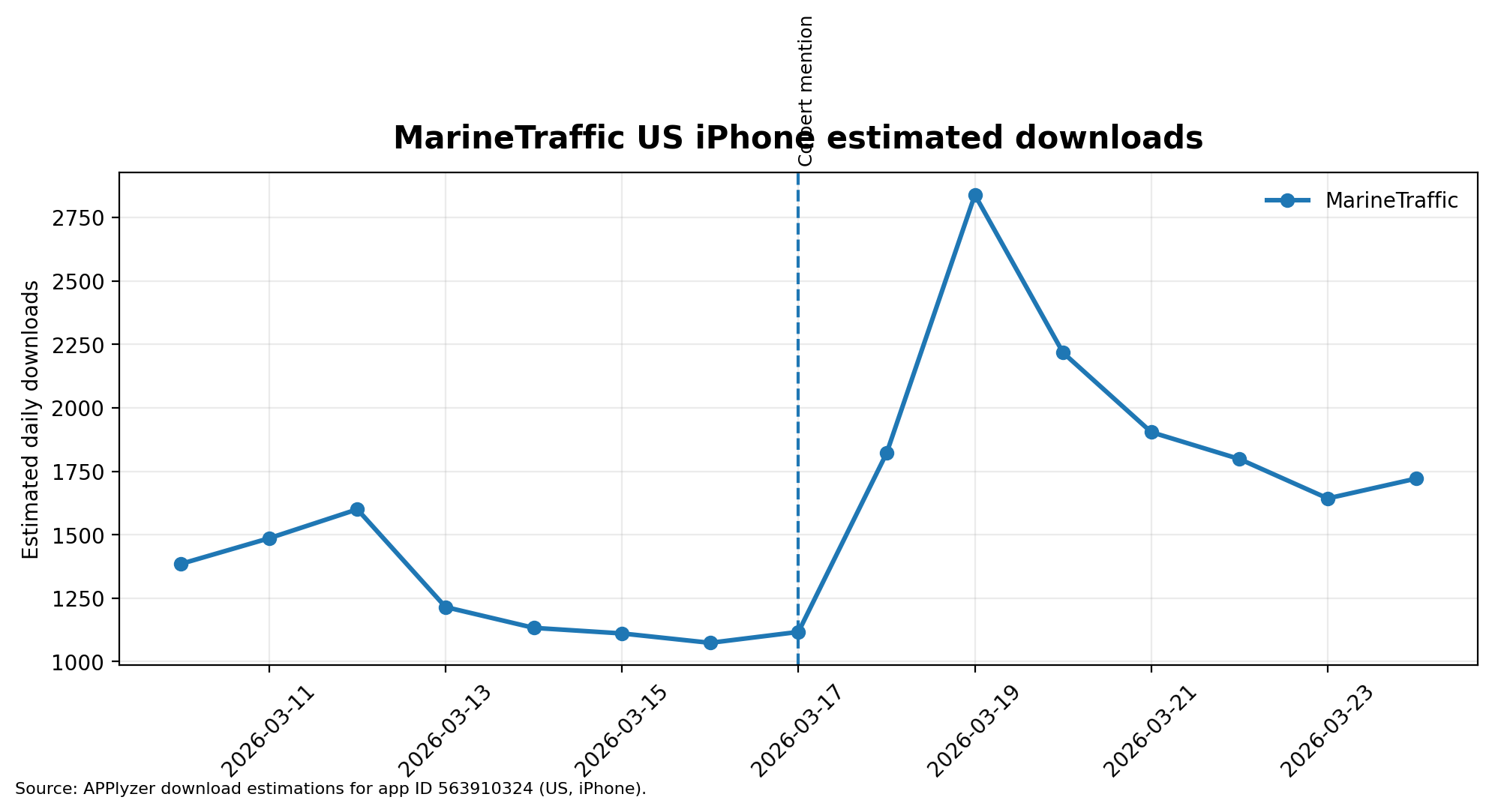
Figure 1. MarineTraffic estimated downloads in the US iPhone App Store. The strongest movement starts immediately after the March 17 mention.
Why this matters for App Marketing and App Store Optimization
A lot of App Store Optimization content focuses on metadata, keyword coverage, and conversion rate. Those things matter. But real growth often arrives through moments that happen outside the store. A TV segment, a creator mention, a product launch, or a news cycle can all produce a sudden burst of brand intent.
That is where good App Marketing analysis gets practical. Instead of simply asking whether downloads went up, the better questions are: Did branded search grow? Did generic category demand grow too? Did competitors benefit? And did Apple Search Ads activity show up around the same terms?
APPlyzer is well suited to that kind of event analysis because it lets you move from one lens to another quickly: app performance, keyword demand, ranking visibility, competitor positioning, and Apple Search Ads snapshots.
1. Direct brand impact: MarineTraffic itself
The direct impact is the strongest part of the story. MarineTraffic’s download trend changes shape right after the mention, and its App Store rank responds quickly as well.
The rank chart below helps tell that story at a glance. Free rank improved fast, which is what you would expect when a burst of awareness drives fresh installs. Grossing rank improved too, which suggests that the attention was not purely casual.
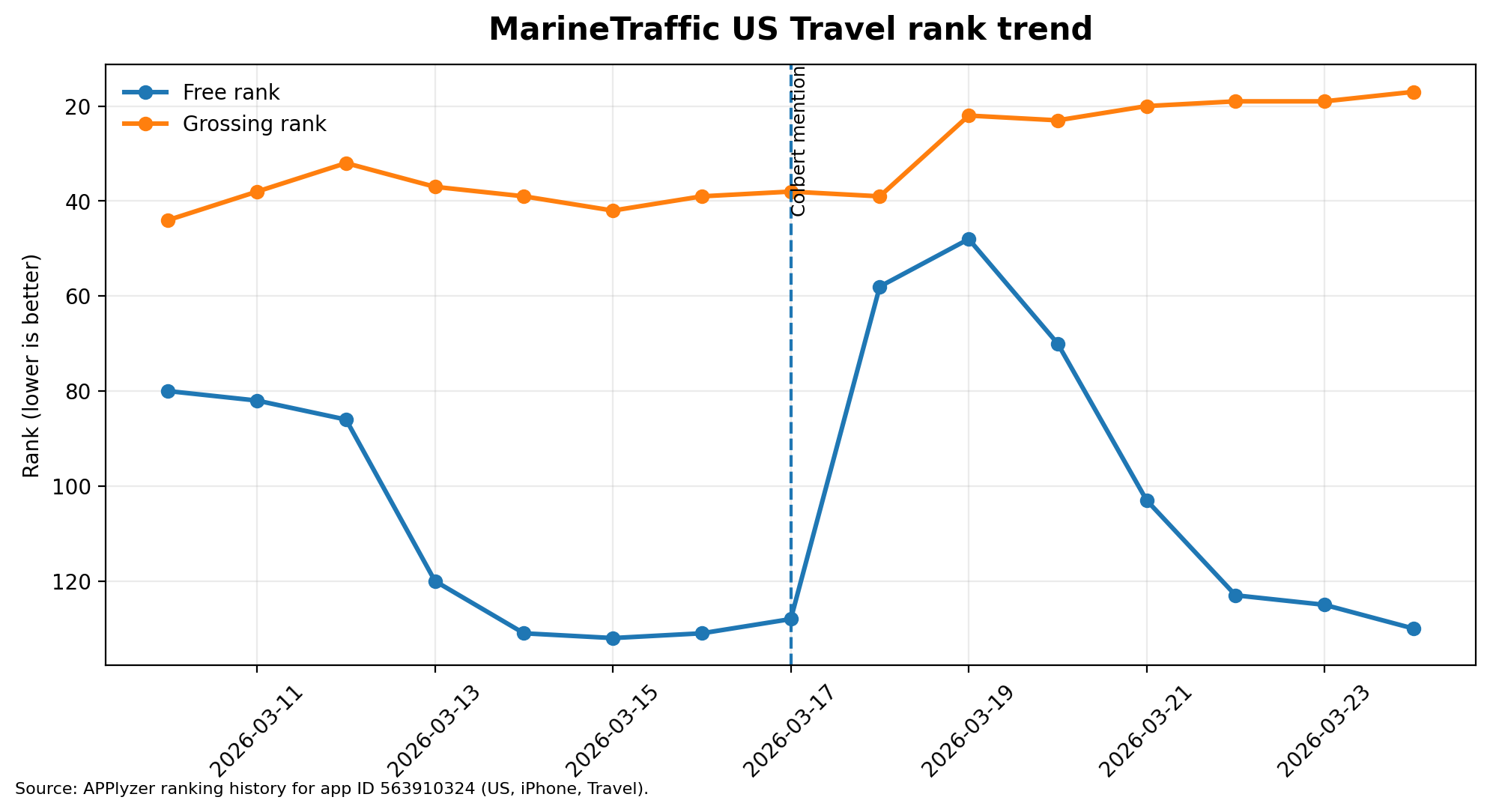
Figure 2. MarineTraffic rank trend in the US Travel category. Lower numbers are better.
This is a nice reminder that App Store Optimization does not happen in a vacuum. The app’s subtitle already leans into the use case, ‘World’s #1 ship tracking app!’, but the outside-world mention appears to have amplified brand-led demand far more than metadata alone ever could.
2. Brand demand versus category demand
This is where the story gets especially useful for ASO readers. If the TV mention had educated a broad audience about the category, we would expect generic terms such as ‘ship tracking’ and ‘boat tracking’ to swell dramatically. Instead, the branded term looks much larger than the generic terms in APPlyzer’s current keyword view.
For US iPhone, APPlyzer shows the keyword ‘marine traffic’ at a search score of 40 and max estimated daily impressions of 1,814. By comparison, ‘ship tracking’ sits at score 8 with 254 max estimated daily impressions, ‘boat tracking’ sits at score 6 with 224, and ‘vessel tracking’ sits at score 5 with 211.
That does not mean the generic terms do not matter. It means the first wave of value appears to have been captured by the named brand. For marketers, that is an important distinction.
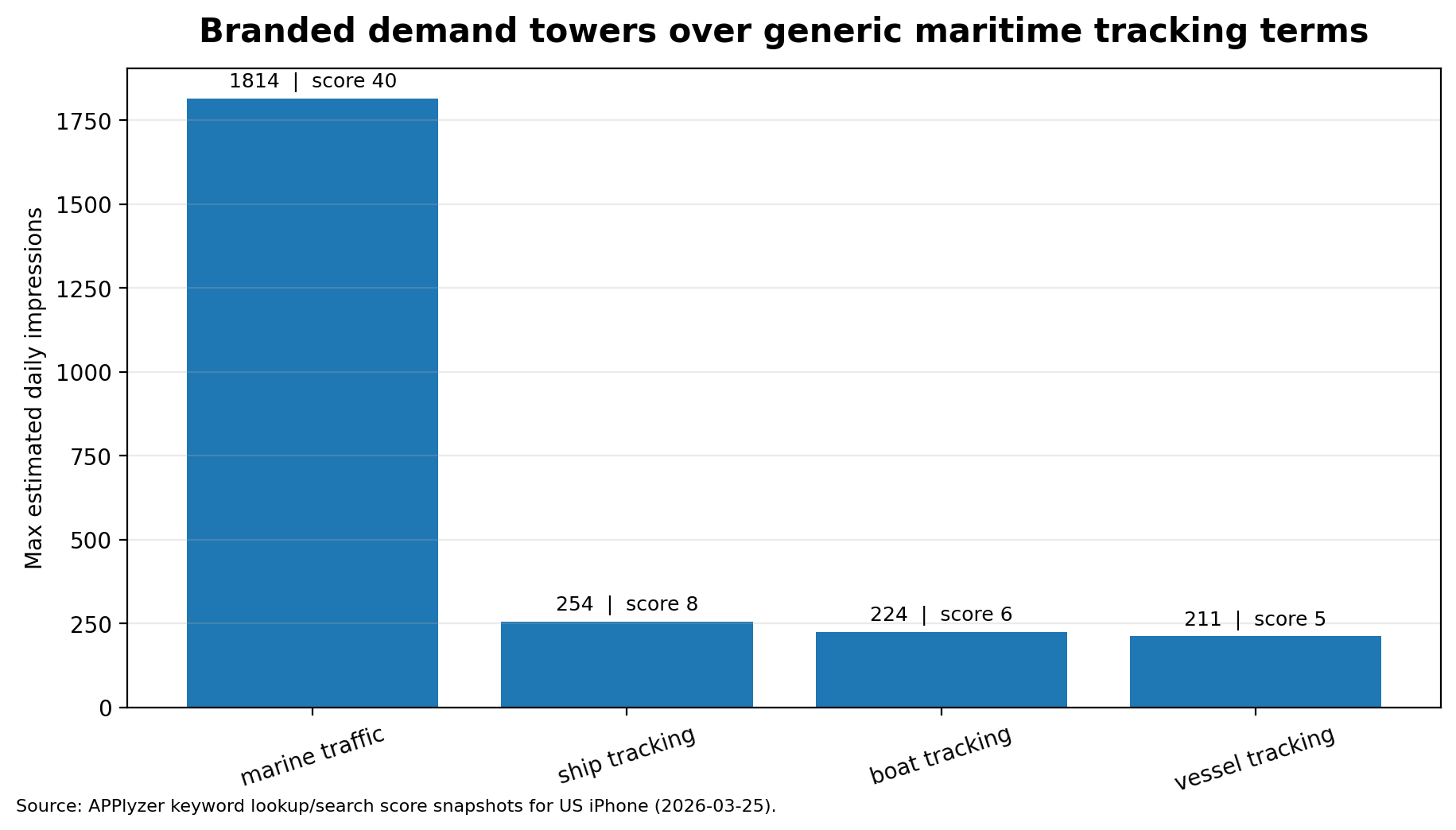
Figure 3. Brand demand is materially larger than the generic maritime-tracking terms in the current APPlyzer keyword snapshot.
3. Did competitors get a halo effect?
A common App Marketing assumption is that a rising tide lifts all boats. In some categories that is true. In this case, the data points to something narrower and more interesting: a brand-capturing spike.
MarineTraffic’s estimated downloads jump materially in the post-mention window. By contrast, selected alternatives such as MyShipTracking and Ship Finder Lite show only modest movement. They do not look flat, but they do not mirror MarineTraffic’s step change either.
That suggests the TV mention behaved less like a broad category education event and more like a branded recommendation. Users did not simply go looking for any ship-tracking app. A lot of them appear to have gone looking for the app that was named.
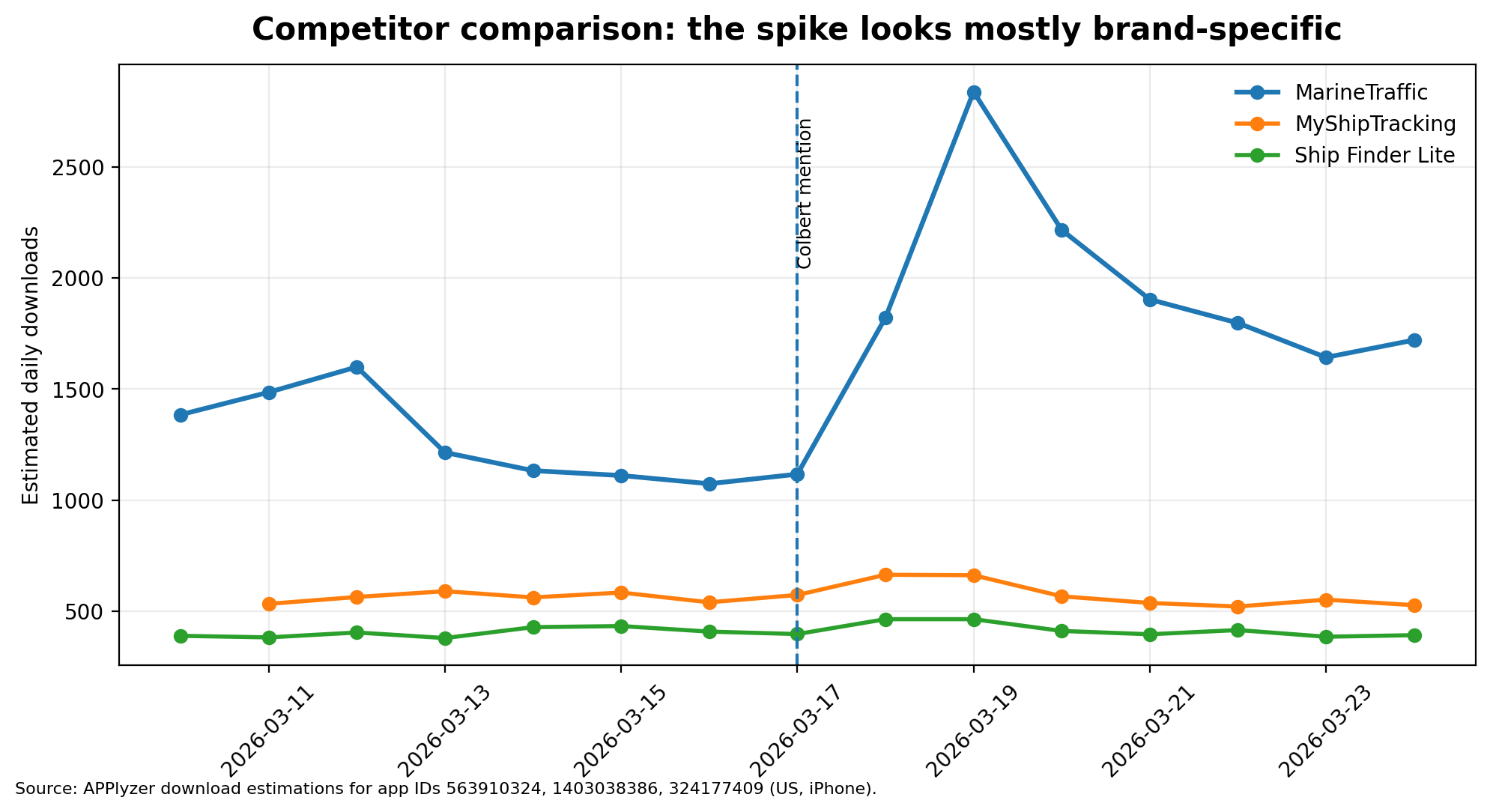
Figure 4. Selected competitor comparison. The post-mention spike looks much stronger for MarineTraffic than for nearby alternatives.
That is a very useful lesson for competitor analysis. If you only watch category-level movement, you may miss the fact that a media moment was captured almost entirely by one brand.
4. Is there an Apple Search Ads impact here?
Yes, and it is a good one. It just is not the obvious ‘everyone started bidding on the brand term’ story.
In the APPlyzer Search Ads snapshot checked for this article, the terms ‘marine traffic’, ‘ship tracking’, and ‘boat tracking’ showed no visible ads. ‘Vessel tracking’ did show ads. That gives us a useful read on the moment: the early impact appears to have been organic-first rather than obviously monetized through visible Apple Search Ads placements on the main brand and generic terms.
For App Marketing teams, that opens two smart follow-up questions. First, if a brand suddenly enters popular conversation, should you protect the brand term in Apple Search Ads even if you already rank strongly organically? Second, are there adjacent generic terms, such as ‘vessel tracking’, where paid visibility matters more than on the exact branded query?
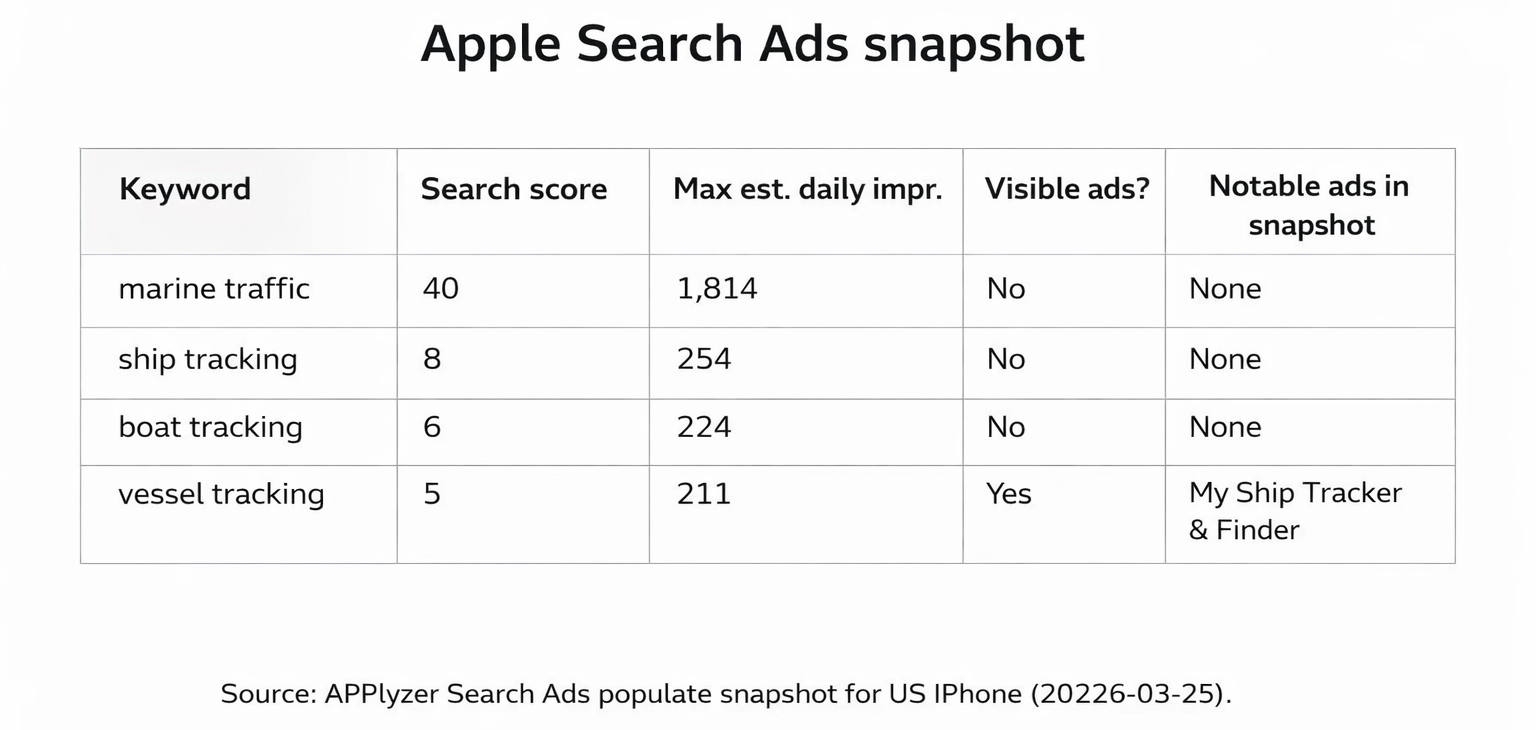
Figure 5. Apple Search Ads snapshot. No visible ads appeared for the three headline terms in this APPlyzer check, while ‘vessel tracking’ did return ads.
That makes the Apple Search Ads angle additive rather than forced. It helps frame the event as a story about demand capture, not just demand creation.
What app marketers can learn from the MarineTraffic moment
First, separate brand demand from category demand. They do not always move together, and this case suggests they did not move together in equal measure.
Second, compare direct app performance with competitor movement. If one app spikes while nearby rivals barely budge, you are probably looking at brand capture rather than broad category lift.
Third, treat external media moments as natural ASO experiments. They reveal how strong your brand memory is, how discoverable your app is in search, and whether your market is set up to absorb the attention.
Fourth, check Apple Search Ads visibility even when the effect looks organic. Paid search may be quiet on the core term but active on adjacent ones, which can still shape the broader category battle.
Conclusion
MarineTraffic is a nice reminder that App Store Optimization is not only about changing metadata fields and nudging conversion rates. It is also about understanding how real-world attention flows into the store.
In this case, the clearest effect of a primetime TV mention looks like a branded-demand shock. Downloads rose, rankings improved, and the brand term dwarfed the generic category terms. Competitors did not fully share the moment. Apple Search Ads did not obviously crowd the three headline terms in the snapshot we checked, which makes the organic story even more interesting.
That is exactly why APPlyzer is useful here. It helps answer the question behind the headline: not just did something happen, but where did it happen first, who captured it, and what should marketers do with that insight next?
————
If you’d like to discuss scalable & sustainable growth opportunities for your app (not just getting lucky with a primetimeTV mention!), please get in touch with our team of expert Consultants today as we’d love to see how we can help!